
 Home
About Us
Our Team
Sustainability
Certificates
Products
Projects
Gallery
Blog
Downloads
Career
Contact Us
Home
About Us
Our Team
Sustainability
Certificates
Products
Projects
Gallery
Blog
Downloads
Career
Contact Us
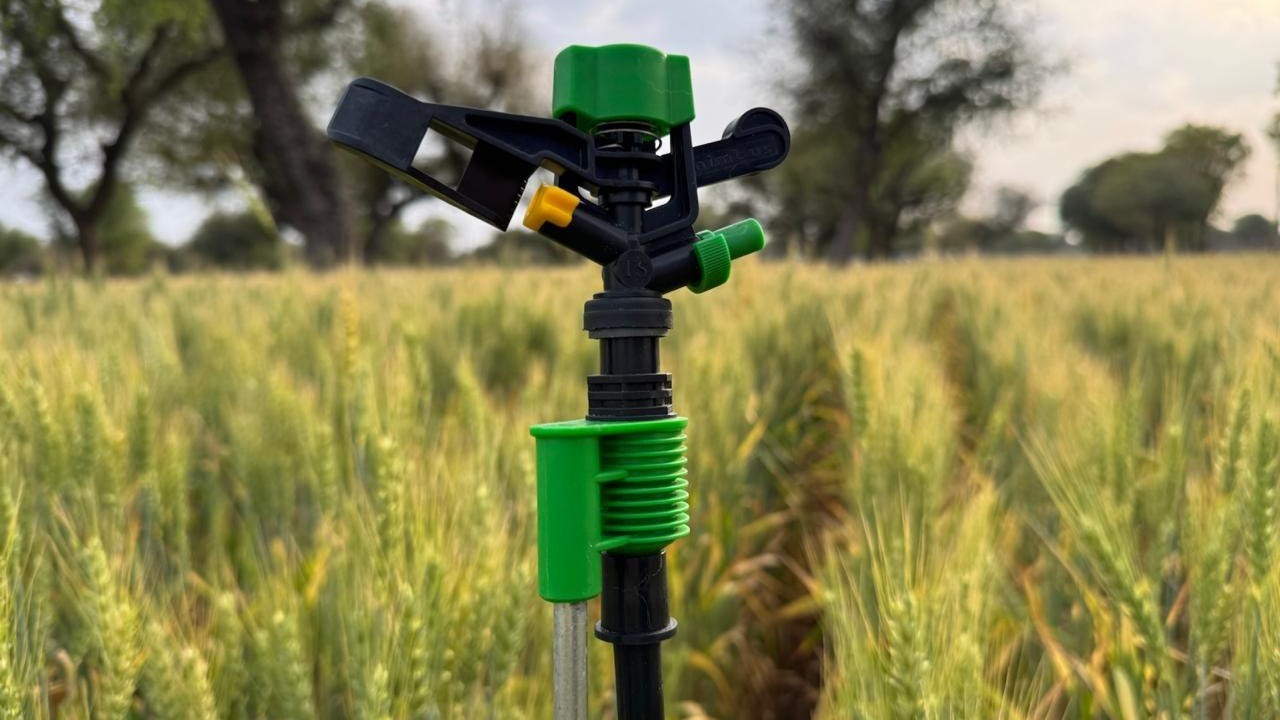
Water scarcity, erratic rainfall, rising temperatures, and increasing frequency of extreme weather events are redefining how agriculture must operate. In this evolving scenario, irrigation technologies are no longer just tools for water application—they are critical instruments for climate resilience, productivity enhancement, and resource efficiency. Among these, the Mini Sprinkler Irrigation System, a refined form of micro irrigation, is emerging as a highly adaptable and farmer-friendly solution.
Mini sprinklers operate at low to medium pressure, delivering water in the form of fine droplets over a defined wetted area. Positioned between drip irrigation (localized) and conventional sprinkler (full coverage), mini sprinklers provide a balanced irrigation approach—ensuring both efficiency and adequate soil moisture distribution.
They are particularly suitable for:
One of the foremost advantages of mini sprinklers is controlled irrigation water delivery. Unlike flood irrigation or high-discharge sprinkler systems, mini sprinklers:
This precision becomes crucial under climate variability, where water availability is uncertain and must be used judiciously.
Traditional overhead sprinkler systems often require manual shifting of pipes and sprinklers, leading to:
Mini sprinkler systems, especially when installed as semi-permanent or permanent setups, eliminate this challenge. Once installed:
This makes it a highly practical solution for labor-scarce and large farm conditions.
Conventional sprinkler systems often discharge large droplets at high velocity, which can:
Mini sprinklers, by contrast, emit fine droplets with low kinetic energy, resulting in:
This is particularly beneficial in maintaining long-term soil health—an essential pillar of sustainable agriculture.
Frost events can severely damage crops, especially during sensitive growth stages. Mini sprinklers offer an effective solution through:
This makes mini sprinklers a proven frost mitigation tool, especially valuable in:
Climate change has intensified heat stress, particularly during the grain filling stage in crops like wheat. High temperatures during this phase can:
Mini sprinklers can be strategically used for micro-climate modification by:
This targeted intervention can significantly protect yield potential under heat stress conditions.
Mini sprinkler systems align strongly with the principles of climate-resilient agriculture:
As agriculture moves towards precision, sustainability, and resilience, mini sprinkler irrigation stands out as a versatile and scalable solution. For farmers facing:
this technology offers a reliable, efficient, and future-ready irrigation option.
Mini sprinkler irrigation is not just an incremental improvement over conventional systems—it represents a strategic shift towards smarter water management and climate adaptation. By combining precision irrigation, reduced labor dependency, soil health preservation, and climate stress mitigation, it positions itself as a perfect technology for resilient agriculture in the face of climate change.